I'll admit it. I'm wound too tight when it comes to plotting stories. I'm terrified of plot holes. You know, that cute little a short-circuit in a story which makes the whole dream world flutter down like a house of cards.
The strange thing is, I'm far more forgiving of plot holes missed by other authors. Let's face it. Plot holes are everywhere. There are plot holes in life.* They're simply called senior moments, or forehead slappers, or mistakes. We don't always see the obvious solution or inconsistency.
I have to let this fear go, because it makes me miss out on the chance to create some truly inventive stories. Every single angle doesn't need to square up. Heck, if J.R.R. Tolkien is guilty of a major plot hole, I can certainly hazard one. Check out this all-too-true parody of Lord of the Rings:
That didn't occur to me. Giant eagles were a deus ex machina device used twice in the series. Why not use it right up front?
I think Tolkien just groaned in the grave.
It's okay, man. Really.
(*Like the time I got horribly lost in the woods in winter. The whole traumatic experience could have been avoided if I thought to follow my tracks back through the virgin snow.)
Friday, June 29, 2007
Wednesday, June 27, 2007
"Westinghoused," Part 2
(In the late 1800’s, the battle between two competing electric technologies, AC and DC currents, turned brutal. For Thomas Edison, it was a life and death struggle. This is a fictionalized version of true events in history.)

July 30, 1888
Two rows of eyes glittered in the dim light. The stage blazed like daylight. Harold smiled at the thought of whose light bulbs lined the heights above him.
"As you can see, gentlemen, the delivery of direct current to the animal caused obvious pain and distress, but was ultimately harmless. The animal is shaken, but healthy."
An open hand directed attention to the apparatus. The dog stopped pulling at the rope around its neck. Its haunches settled on the metal plate and shook.
The assistant stood near in case it whined again.
"All electricity is dangerous. It is not a plaything. But the system powered by General Electric, gentlemen, direct current, is orderly, controlled, and predictable. In short it is safe so long as reasonable prudence and precautions are employed. To err is human. Except in the most egregious circumstances, a mistake with direct current will not be paid for with your life."
A flashbulb captured Harold's beneficent pose. The reporters muttered.
"Mr. Brown?"
It was the man Harold was watching.
"Mr. Brown?"
"Please hold all questions to the end of the demonstration. Thank you."
"Mr. Brown are you employed by Thomas Edison and the General Electric Company?"
The assistant left his position and moved toward the audience in the darkness. Another man angled toward the reporter from the rear.
"You all know my interest in this topic," Harold said. "After I witnessed that young boy so pitifully struck down by a telegraph wire powered by the Westinghouse system, I've made it my mission to educate the public on the dangers of that ill-advised technology."
The two men whispered to the reporter. A hand clamped on his shoulder. Harold continued.
"Now, gentlemen, we've met the cultured and refined force of direct current. But the invisible world harbors a darkness and evil counterpoised to this source of good. 'Alternating current' is an innocent and misleading name for this primal, destructive force. Where direct current is the calm river flowing through the countryside, alternating current is a mountain cataract, white waters boiling and crashing and destroying."
Harold's voice was rising.
"It's like passion unleashed. Anger, hatred, lust, burning below the surface of the copper wire. It deceives us with its silence."
Harold disconnected the direct current generator and engaged the Westinghouse circuit.
"You see. No difference. Just the hum of the generator. Nothing to alert you to the mortal danger."
He moved to the switch. The dog was panting.
"But it's a lie, gentlemen. That fury dipped from the ancient forces of chaos and devastation cannot be tamed or domesticated."
Eyes began to shift from Harold to the dog. Harold fixed on the representatives of the New York Board of Electrical Control.
"When you invite Mr. Westinghouse into your home, gentlemen, you invite the fires of the devil himself!"
His hand touched the switch and fingers curled.
"Do you want this crossing the sky over your heads? Do you want this in the walls of your homes? The devil is hungry, gentlemen. He is waiting to devour you!"
Metal touched metal. The circuit closed.
The jumping motion of the dog didn't clear the plates. The paws seemed welded down.
Harold's voice was maniacal. "Do you see? Do you want this to be your child?"
The reporters were shouting.
The popping sounds deepened and something began to burn.
On to Part 3.
Back to Part 1.
(If you enjoy this kind of fictionalized history series, feel free to check out The X-Ray Martyrs to meet a couple of the many people who died before we understood the dangers of radiation.)

July 30, 1888
Two rows of eyes glittered in the dim light. The stage blazed like daylight. Harold smiled at the thought of whose light bulbs lined the heights above him.
"As you can see, gentlemen, the delivery of direct current to the animal caused obvious pain and distress, but was ultimately harmless. The animal is shaken, but healthy."
An open hand directed attention to the apparatus. The dog stopped pulling at the rope around its neck. Its haunches settled on the metal plate and shook.
The assistant stood near in case it whined again.
"All electricity is dangerous. It is not a plaything. But the system powered by General Electric, gentlemen, direct current, is orderly, controlled, and predictable. In short it is safe so long as reasonable prudence and precautions are employed. To err is human. Except in the most egregious circumstances, a mistake with direct current will not be paid for with your life."
A flashbulb captured Harold's beneficent pose. The reporters muttered.
"Mr. Brown?"
It was the man Harold was watching.
"Mr. Brown?"
"Please hold all questions to the end of the demonstration. Thank you."
"Mr. Brown are you employed by Thomas Edison and the General Electric Company?"
The assistant left his position and moved toward the audience in the darkness. Another man angled toward the reporter from the rear.
"You all know my interest in this topic," Harold said. "After I witnessed that young boy so pitifully struck down by a telegraph wire powered by the Westinghouse system, I've made it my mission to educate the public on the dangers of that ill-advised technology."
The two men whispered to the reporter. A hand clamped on his shoulder. Harold continued.
"Now, gentlemen, we've met the cultured and refined force of direct current. But the invisible world harbors a darkness and evil counterpoised to this source of good. 'Alternating current' is an innocent and misleading name for this primal, destructive force. Where direct current is the calm river flowing through the countryside, alternating current is a mountain cataract, white waters boiling and crashing and destroying."
Harold's voice was rising.
"It's like passion unleashed. Anger, hatred, lust, burning below the surface of the copper wire. It deceives us with its silence."
Harold disconnected the direct current generator and engaged the Westinghouse circuit.
"You see. No difference. Just the hum of the generator. Nothing to alert you to the mortal danger."
He moved to the switch. The dog was panting.
"But it's a lie, gentlemen. That fury dipped from the ancient forces of chaos and devastation cannot be tamed or domesticated."
Eyes began to shift from Harold to the dog. Harold fixed on the representatives of the New York Board of Electrical Control.
"When you invite Mr. Westinghouse into your home, gentlemen, you invite the fires of the devil himself!"
His hand touched the switch and fingers curled.
"Do you want this crossing the sky over your heads? Do you want this in the walls of your homes? The devil is hungry, gentlemen. He is waiting to devour you!"
Metal touched metal. The circuit closed.
The jumping motion of the dog didn't clear the plates. The paws seemed welded down.
Harold's voice was maniacal. "Do you see? Do you want this to be your child?"
The reporters were shouting.
The popping sounds deepened and something began to burn.
On to Part 3.
Back to Part 1.
(If you enjoy this kind of fictionalized history series, feel free to check out The X-Ray Martyrs to meet a couple of the many people who died before we understood the dangers of radiation.)
Monday, June 25, 2007
Crossways

The sun weighs
Sleep on the forest canopy
Rippling the air
With silent heat

Hooves cut timid
Trails winding where
Boot packed roads
And elevations meet

Listen and cross.
Secret ways
Weave the skeleton branches and
Tilt the ferns without a breeze
(Stealthcam I230IR trail camera set on "Bear Trail" overlooking a deer crossing point. Starlight, Wayne County, Pennsylvania.)
Friday, June 22, 2007
"Westinghoused," Part 1
(In the late 1800’s, the battle between two competing electric technologies, AC and DC currents, turned brutal. For Thomas Edison, it was a life and death struggle. This is a fictionalized version of true events in history.)

Harold Brown
July 30, 1888
Behind the curtain, Harold Brown checked the connections to the heavy metal plates.
He tugged. Wiggled. Pushed.
Good and strong. It should pass clean current.
He traced the wire back to the rocker switch where a screw clamped it down. He still wondered if the gauge was too thin.
"Mr. Brown?"
Harold moved to the connections on the generator. "What?"
"There's another one at the back door."
"No. We have enough."
"I told him that, but he's putting up a fuss. I think he may be drunk."
Harold huffed.
"I told him to go away, but he's refusing."
In the side room, something set the dogs in the cage yapping. The sound shook Harold's attention to pieces.
He slapped his hands down on his thighs. "Then pay him and be done with it!"
"Where should I--"
"In the cage! With the others!"
The assistant turned.
"No, wait." Harold followed along the other half of the circuit. "Bring it here. I'm almost ready. Tie it to the post and keep it quiet."
On to Part 2.
(If you enjoy this kind of fictionalized history series, feel free to check out The X-Ray Martyrs to meet a couple of the many people who died before we understood the dangers of radiation.)

Harold Brown
July 30, 1888
Behind the curtain, Harold Brown checked the connections to the heavy metal plates.
He tugged. Wiggled. Pushed.
Good and strong. It should pass clean current.
He traced the wire back to the rocker switch where a screw clamped it down. He still wondered if the gauge was too thin.
"Mr. Brown?"
Harold moved to the connections on the generator. "What?"
"There's another one at the back door."
"No. We have enough."
"I told him that, but he's putting up a fuss. I think he may be drunk."
Harold huffed.
"I told him to go away, but he's refusing."
In the side room, something set the dogs in the cage yapping. The sound shook Harold's attention to pieces.
He slapped his hands down on his thighs. "Then pay him and be done with it!"
"Where should I--"
"In the cage! With the others!"
The assistant turned.
"No, wait." Harold followed along the other half of the circuit. "Bring it here. I'm almost ready. Tie it to the post and keep it quiet."
On to Part 2.
(If you enjoy this kind of fictionalized history series, feel free to check out The X-Ray Martyrs to meet a couple of the many people who died before we understood the dangers of radiation.)
Wednesday, June 20, 2007
200 Seconds
I'm posting my Wednesday post early to invite you to read my flash fiction piece "200 Seconds" posted over at Muzzle Flash, D.Z. Allen's cool site of pulp and degenerate flash fiction.
In association with Out of the Gutter magazine, D.Z. was looking for war stories in which bad people do bad things to bad people. A scene leapt into my head right away, and I did my best to capture it.
Interested? Pop over and take a look. (Warning: adult language and violent themes.)
**200 Seconds by Jason Evans**
In association with Out of the Gutter magazine, D.Z. was looking for war stories in which bad people do bad things to bad people. A scene leapt into my head right away, and I did my best to capture it.
Interested? Pop over and take a look. (Warning: adult language and violent themes.)
**200 Seconds by Jason Evans**


Monday, June 18, 2007
Quantum Moments
I can see you
Your brown skin shining in the sun
You got your hair combed back
And your sunglasses on.
--Don Henley, The Boys of Summer
When you reach through the hallways of your memories, do you feel them? Your fingertips might touch warmth in the darkness, or gravelly confusion, or a prick of pain. But there are some moments which break the rules. Some moments bleed far beyond the handful of seconds containing them. Those are the quantum moments, opening you, defining you. They exist in the past, present, and future at once. Somehow, they touch you, and once the sensation is felt, it endures and helps to shape every person you will ever be.
Here are some of mine:
*Wrapped in darkness along a wooded cemetery road. I was reading Tarot Cards by candlelight for two friends, one who had never been to a cemetery at night. I said to him, "can you feel that?" It was all around us. Some kind of electricity. So alive. I looked for it in his face, but all I saw were nerves and questions. "No," he finally said.
*Spring Arts weekend at college my freshman year. My wife and I were dating a few weeks. The campus was kicked back, dreamy, and free. The two of us drank a bit and crept out into the well-to-do streets of Lancaster in the wee hours. I remember keeping to the shadows and sitting by a pool house on a large estate. We left no trace we were ever there, but it left a mark on me.
Care to share any of your quantum moments?
Friday, June 15, 2007
Remember: Joseph Christie

The Remembrance Series: When I walk among old graves, I think about the voices struggling to endure. Someday not even stone will protect us from being forgotten. Yet, we can give these voices a little more life in a way they never could have imagined.
So please take a moment with me to remember....
Inscription:
Suffer the children to come unto me
Joseph Christie
Son of Wm. W. L. and
Jennie Bennett
Born Sept. 27th, 1869
Died May 28th, 1872
In his 3rd Year
Suffer the children to come unto me
Joseph Christie
Son of Wm. W. L. and
Jennie Bennett
Born Sept. 27th, 1869
Died May 28th, 1872
In his 3rd Year
The porcelain toy-like ornaments and flowers are fixed to the stone. Perhaps the centerpiece was once daisies with the petals long disintegrated. Something about those object keep the presence of Joseph closer. I imagine him bored with his Sunday visit to the cemetery. I imagine him sitting down to play.
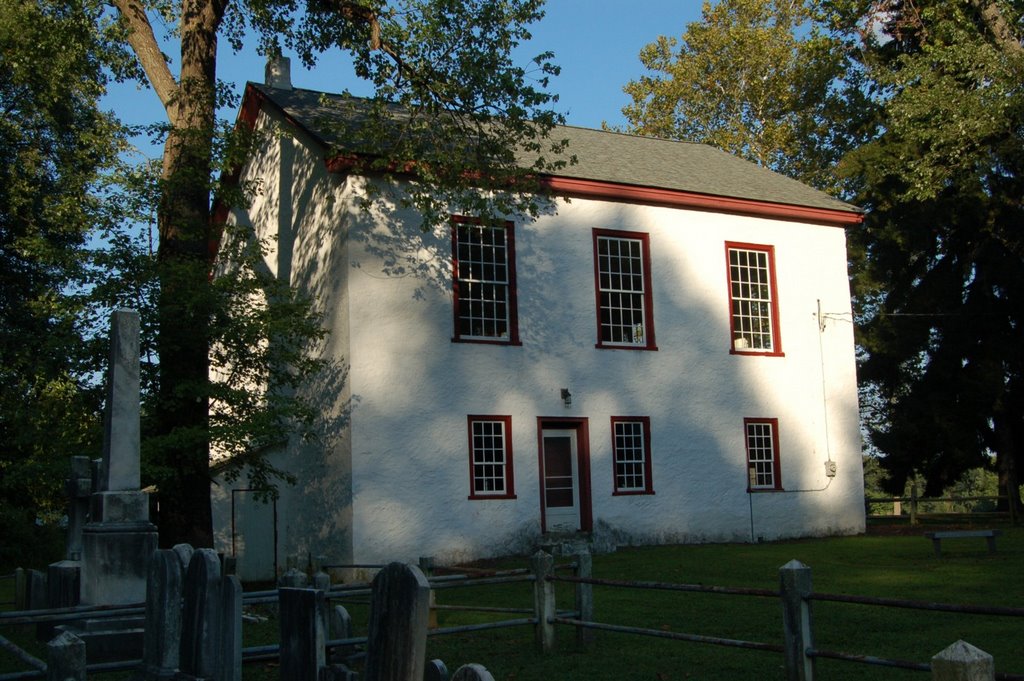
(Hibernia Methodist Church Est. 1841, Chester County, Pennsylvania)
Wednesday, June 13, 2007
Strength of the Mountain

She moves with a power born before the trees.

Her color is blacker than starlit darkness. It exist nowhere in these forests other than her coat.

Like a secret whispered in early summer, the strength of the mountain is reborn.
(Taken in a quiet hemlock grove with a Stealthcam I230IR Trail Camera. Starlight, Wayne County, Pennsylvania.)
Monday, June 11, 2007
White Roses, Part 3, Final (Ghost Story)

(Just joining us? Check out Part 1 and Part 2.)
The young woman's steps disappear along the hedge. You turn back to the house and push against the weight of its emptiness.
You walk and listen. The silence reforms.
Tired and arthritic legs reach for each stair and lift you onto the porch. You sink into the chair on the left. Never the right. That is where your brother sat a lifetime ago when you were children. He slouched with his soft hat and his shoes dropping mud as it dried.
He was always the romantic one, saying hello to the ladies and blushing at the girls. He loved that old rose bush and used to offer the blossoms with his eyes shining. No one was safe in their yard on a summer afternoon, pretty or not.
You chuckled at their faces when he spoke to them and smiled. But he died before learning what their parted lips truly meant.
You fall asleep on the porch in the afternoon shade.
Your body lifts.
Just a little. And you see him. He gives you that little smile he always saved for you.
The pinch barely wakes you, and your fingers pat the thorny stem resting in your lap. You bring the bloom up and sprinkle the fragrance into your dream.
Wrinkled fingers lay it aside on wicker table.
A single white rose.
Back to Part 2.
Friday, June 08, 2007
Morality Poems--Society

Have you ever heard of the New England Primer? First published in 1690, it was part religious message, part English text book, and part introduction to Puritan ruler-whacking goodness.
I've always been fascinated by the little rhyming couplets the Primer uses as a mnemonic to teach the alphabet. They are ingenious vehicles for indoctrination. It's a lost art (probably a good thing).
These "Morality Poem" posts are my little attempt to philosophize about the world New England Primer style. Can you guess in one word what I'm trying to describe in each of these "lessons?" Hint: each represents something damaging to society.
The mind of justice hears and weighs,
The knife of the righteous blindly slays.
Public faces wave the fist
Then shiver with secret bedrooms' kiss.
(My first attempt at one of these was a little while ago. Strangely enough, this post gets the most random hits from Yahoo and Google searches. Folks are searching for moral guidance, I suppose.)
Wednesday, June 06, 2007
First Light

Black forests hiss
When the night Earth rumbles
Bleed and shiver with
Invisible skies.
Lakes fall in
Bellowing waves
The world hangs
Washed in penitence.
Glowing curtains
Split
Dreams no longer
Shaken
Over the mountain
Shines
The cleanest rays ever
Savored
By life's first bloom.
Monday, June 04, 2007
White Roses, Part 2
(My tribute to the Victorian ghost story, but written in the uncommon second person present voice. For Part 1, click HERE.)
The wind blows, and the woman's hair feathers across her shoulders. A hand drifts up, wistful, and draws the barest touch across her neckline.
"Do you smell the roses? I don't remember ever smelling anything like it."
You frown. She's pretty and young. A stranger.
The air settles once more, and silk blond strands fall over her eyes. She smiles at something far, far away.
"They're too beautiful to touch."
The dark windows of the house peer down. Sometimes the old woman looks out. Sometimes she watches the empty garden.
"I can...." The words are slow, and the young woman's breath fades.
"Can what?" you say.
Her face softens as if she's curled in the arms of a dream.
Irritating.
"Can what?"
Her lips part to say the words, but close again. No matter. You've experienced it. You see the enchantment shadowed in her face.
Hear him.
Her chest rises and falls. A warbler speaks in the hush.
The garden hasn't been tended in years. Under the weave of high grass and tassels, the last flakes of rosewood rots into the dirt. Nothing blooms there anymore.
"You should go," you say.
The words float past her.
"Now!" You grab her arm and pull her in the direction of the street.
The jolt penetrates, and her eyes dart until they find yours and cling.
"But I--"
"You should go."
She blinks.
"Go!"
Your hand forces her toward the wisteria and the sidewalk beyond.
She looks back, but does not speak. Her expression clouds when she sees the decrepit garden. The rose bush is gone.
On to Part 3.
Back to Part 1.
Friday, June 01, 2007
May 31, 1889
I'd like to tell you a little story about my hometown of Johnstown, Pennsylvania. I took pictures during my visit back in October in anticipation of this post today.
Western Pennsylvania is a region of mountains, coal, and deep valleys. The cities became centers of iron and steel making, giving rise to the age of the robber barons. Pittsburgh was home to names like Carnegie, Mellon, Frick, and Knox.
The South Fork Fishing and Hunting Club was established near the towns of South Fork and St. Michael high in the mountains above the valley city of Johnstown. It was the playground of Pittsburgh's elite, and their cottages and clubhouse sat along the shores of Lake Conemaugh, a man-made lake two miles long and one mile wide.
The dam forming the lake had been part of a defunct canal system and had last been owned by the Pennsylvania Railroad. The Club altered and raised the dam. The spillway was blocked with screens to keep their prized fish from escaping. The soundness of the structure had long been questioned.
Beginning on May 28, 1889, a storm hit the region which dropped 6 to 10 inches of rain in 24 hours. Waters rose quickly, and soon water was spilling over the dam. All the inadequate safety measures failed, and the center of the earthen dam eroded. Four hundred acres of lake, 20 million tons of water, began emptying into the valley. The chief engineer could only watch.

(Standing on the breast of the dam and looking to the other side.)
The waters hit a viaduct crossing the downstream valley, and a new lake temporarily formed. When that viaduct failed, it was not a gradual release like the dam. It broke at once, sending a 60 foot wall of water with trees, houses, people, and animals roaring down the valley at 40 miles per hour.

(The position of the original dam.)
A stone railroad bridge still stands in Johnstown, which withstood the main wave. It didn't spare the city from wide destruction, however. In addition, a factory had been destroyed miles upstream, and spools of newly manufactured barbed wire mixed with the debris. At the stone bridge, a great debris field formed with many people becoming entangled in the barbed wire. Broken oil lamps lit a horrendous fire, and many people burned in the midst of the flood. In all, 2,209 died, including 99 entire families.
High in the hills overlooking Johnstown sits Grandview Cemetery. There, 777 unidentified victims were interred. I've always been struck by the rows and rows of blank stones. They form strange blinking patterns when you drive by.

Something about those empty stones haunts me. More than once, I sat at the foot of this monument after dark.

During those quiet nights, the moon glowed on the marble and mildewed white. I wish I had written my thoughts.
One of my ancestors was killed before the waters reached Johnstown. In a way, then, I suppose those waters touched me too. Thank you for taking a moment with me to remember him and hundreds upon hundreds of others who perished.

Western Pennsylvania is a region of mountains, coal, and deep valleys. The cities became centers of iron and steel making, giving rise to the age of the robber barons. Pittsburgh was home to names like Carnegie, Mellon, Frick, and Knox.
The South Fork Fishing and Hunting Club was established near the towns of South Fork and St. Michael high in the mountains above the valley city of Johnstown. It was the playground of Pittsburgh's elite, and their cottages and clubhouse sat along the shores of Lake Conemaugh, a man-made lake two miles long and one mile wide.
The dam forming the lake had been part of a defunct canal system and had last been owned by the Pennsylvania Railroad. The Club altered and raised the dam. The spillway was blocked with screens to keep their prized fish from escaping. The soundness of the structure had long been questioned.
Beginning on May 28, 1889, a storm hit the region which dropped 6 to 10 inches of rain in 24 hours. Waters rose quickly, and soon water was spilling over the dam. All the inadequate safety measures failed, and the center of the earthen dam eroded. Four hundred acres of lake, 20 million tons of water, began emptying into the valley. The chief engineer could only watch.

(Standing on the breast of the dam and looking to the other side.)
The waters hit a viaduct crossing the downstream valley, and a new lake temporarily formed. When that viaduct failed, it was not a gradual release like the dam. It broke at once, sending a 60 foot wall of water with trees, houses, people, and animals roaring down the valley at 40 miles per hour.

(The position of the original dam.)
A stone railroad bridge still stands in Johnstown, which withstood the main wave. It didn't spare the city from wide destruction, however. In addition, a factory had been destroyed miles upstream, and spools of newly manufactured barbed wire mixed with the debris. At the stone bridge, a great debris field formed with many people becoming entangled in the barbed wire. Broken oil lamps lit a horrendous fire, and many people burned in the midst of the flood. In all, 2,209 died, including 99 entire families.
High in the hills overlooking Johnstown sits Grandview Cemetery. There, 777 unidentified victims were interred. I've always been struck by the rows and rows of blank stones. They form strange blinking patterns when you drive by.

Something about those empty stones haunts me. More than once, I sat at the foot of this monument after dark.

During those quiet nights, the moon glowed on the marble and mildewed white. I wish I had written my thoughts.
One of my ancestors was killed before the waters reached Johnstown. In a way, then, I suppose those waters touched me too. Thank you for taking a moment with me to remember him and hundreds upon hundreds of others who perished.

Subscribe to:
Posts (Atom)

